
Wound care, debridement and reconstruction to preserve the foot.

Diabetic foot care treats ulcers and infection in the feet of people with diabetes, with the aim of preserving the foot. It combines wound care, removal of dead tissue, treating infection, improving blood supply and offloading pressure. Early treatment prevents most amputations.
Diabetes causes three problems at once in the foot. Nerve damage means an injury is not felt, so a person walks on it for days. Reduced blood supply means healing is slow. Raised sugar impairs the immune response, so infection spreads faster.
Together these turn a blister or a small cut into a deep ulcer within weeks. The patient often reports no pain at all, which is precisely why they present late. Absence of pain is not reassurance in a diabetic foot, it is the danger.
Dead and infected tissue is removed, sometimes repeatedly, because leaving it prevents healing. Infection is treated with antibiotics guided by culture rather than guesswork. Blood supply is assessed, and where circulation is poor, improving it comes before any reconstruction, since a flap will not survive without inflow.
Offloading is the part patients most often skip. Pressure must be taken off the ulcer with special footwear, a cast or crutches. Continuing to walk normally on an ulcer undoes everything else, and no dressing compensates for it.
Many patients arrive having been told amputation is the only option. Frequently it is not. Where blood supply can be improved and infection controlled, reconstruction with grafts or flaps can close the wound and preserve a working foot.
Salvage is not always right. Where infection threatens life, or where the foot could never bear weight again, a well planned amputation gives a better outcome than months of failed attempts. That judgement is made honestly, with the patient, rather than defaulting either way.
Hyperbaric oxygen therapy means breathing pure oxygen inside a sealed chamber at a pressure higher than the air outside. At that pressure far more oxygen dissolves in the blood plasma than ordinary breathing allows, and it reaches tissue that a poor blood supply is starving. In a diabetic foot that can be the difference between a wound bed able to heal and one that is not.
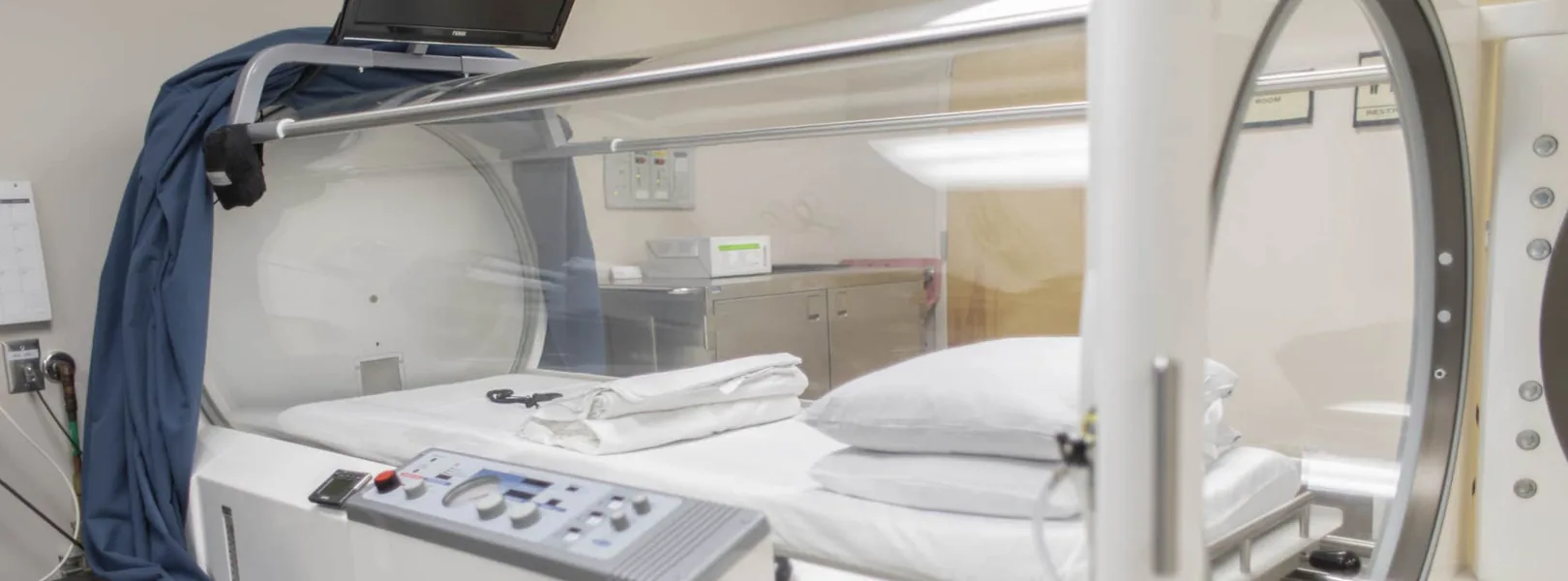
It is an addition to treatment rather than a treatment on its own. Removing dead tissue, restoring blood flow, controlling infection, taking the pressure off the wound and bringing blood sugar under control all still have to happen, and oxygen supports that work rather than replacing any part of it. It is usually given as a course of daily sessions of roughly ninety minutes over several weeks, and it is considered mainly for deeper wounds that have not healed on standard care, particularly where amputation is otherwise being discussed.
It does not suit everyone. An untreated collapsed lung rules it out, certain chemotherapy drugs interact with it, and severe uncontrolled asthma or existing ear and sinus trouble need assessing first. The usual effects are pressure in the ears and sinuses and a temporary short-sightedness that settles after the course ends; seizures from oxygen are rare. Whether it is worth adding is decided case by case, once the foot has been examined and the circulation assessed.
| Factor | What it covers |
|---|---|
| Extent of infection | Deeper infection needs longer admission and more procedures |
| Number of debridements | Dead tissue is often removed in more than one sitting |
| Vascular assessment | Imaging and any procedure to improve blood supply |
| Reconstruction | Graft or flap cover once the wound is clean |
| Offloading and dressings | Special footwear, casts and ongoing dressings |
These pages answer the questions that most often come up alongside this one.
It depends on the depth of infection, how many debridements are needed, whether the blood supply requires treatment, and whether reconstruction follows. An estimate is given after assessment, and updated if the wound needs more stages than expected.
Often yes. Where circulation can be improved and infection controlled, reconstruction can close the wound and preserve a working foot. Many patients told amputation is the only option have alternatives worth assessing.
Diabetic nerve damage removes protective sensation, so injuries go unnoticed. This is why wounds present late and why daily foot checks matter so much for anyone with diabetes.
Diabetic wounds heal slowly, and weeks to months is normal rather than exceptional. Blood sugar control, circulation and consistent offloading are the three things that most affect the timeline.
It varies with severity. Simple debridement may be day-care. Deep infection often needs one to two weeks of admission with intravenous antibiotics, and longer where reconstruction follows.
Progression of infection, failure of the wound to heal, graft or flap failure, recurrence of the ulcer, and in severe cases amputation despite treatment. Poor sugar control and continued smoking raise all of these substantially.
Check your feet daily, including between the toes and under the sole with a mirror. Wear properly fitted footwear, never walk barefoot, keep blood sugar controlled, and have any new break in the skin looked at immediately rather than waiting.
Treatment of diabetic foot infection and related reconstruction is frequently covered. The hospital team assists with pre-authorisation, and urgent treatment is not delayed while cover is confirmed.

Published with written patient consent and shown for education rather than promotion. Every case is different and these images are not a promise of results.

Consultations at Kiran Hospital, Katargam, Surat. Outstation and NRI patients can request a video consultation before travelling.